Ram 1500 Tire Shopping Starts With the Loaded Axle Weight
A taller tread block or a larger load number on a tire sidewall does not tell you whether that tire is the right choice for a working Ram 1500. The useful starting point is the weight carried by each axle in the truck's real travel or towing configuration, followed by the pressure and tire information assigned to that exact vehicle.
The NHTSA TireWise guidance directs owners to the vehicle placard or manual for the original tire size and recommended cold pressure, and warns against using the sidewall maximum as the vehicle's normal inflation instruction. That distinction matters before any discussion of tread type, appearance or replacement size.
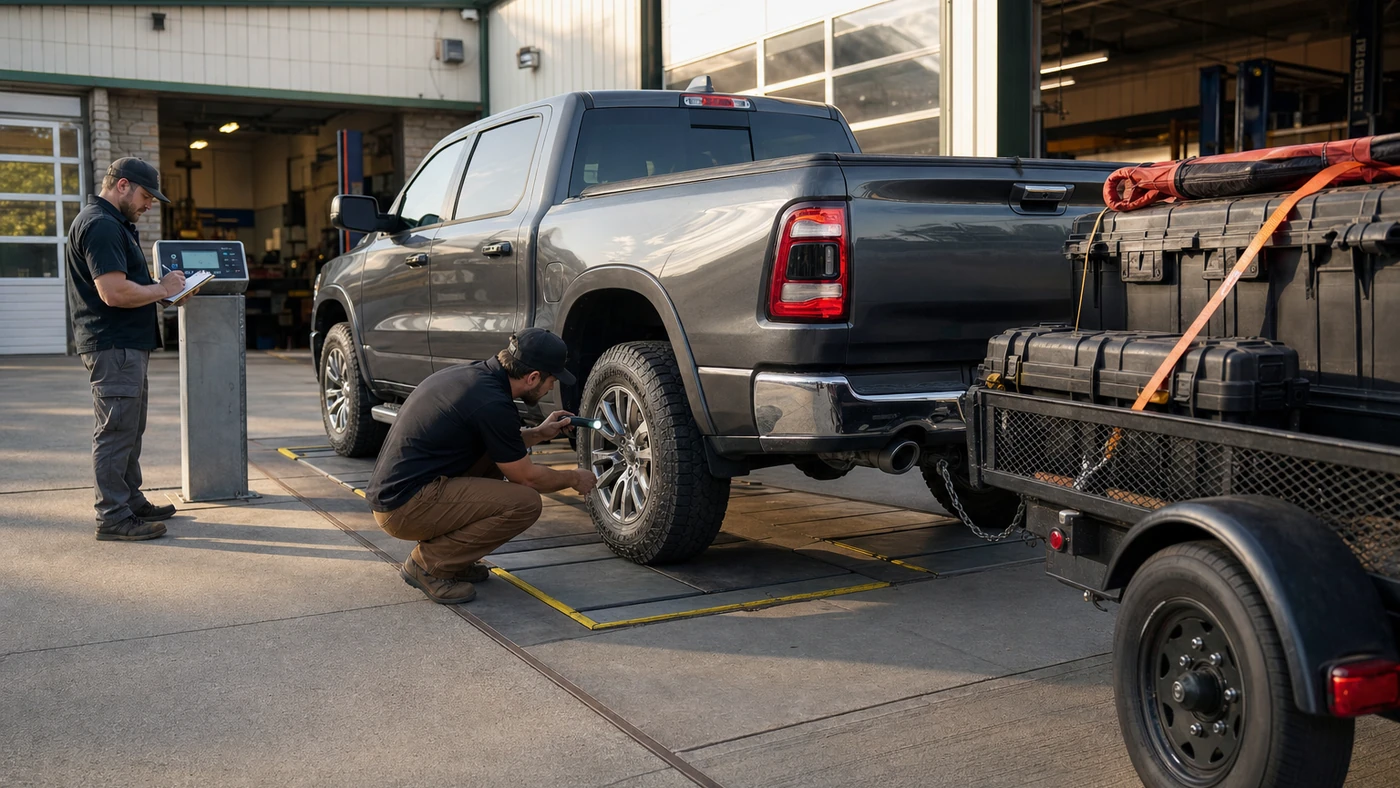
Build a load picture before browsing tire sizes
Begin with the certification label, tire placard and owner's information for the exact cab, bed, drivetrain and option combination. Photograph those labels so the original tire size, cold pressure, gross axle weight ratings and payload statement stay with the work order. Under FMVSS 110, the placard and certification information tie tire and loading information to the vehicle configuration. They are the baseline, not a suggestion to be replaced by a generic chart.
Next, load the truck the way it will leave the driveway. Include the driver, regular passengers, toolbox, bed cover, recovery gear and any other equipment that normally stays aboard. For towing, connect the actual trailer, set the weight-distributing equipment only as its maker and the vehicle instructions permit, and place normal cargo where it will travel. Water, fuel and batteries can change the result enough to matter.
Use a scale that can provide separate front- and rear-axle readings. Record the truck by itself and again with the trailer connected when practical. The difference at the rear axle helps show the effect of tongue load and load transfer; it is not simply the trailer's total weight. Compare each measured axle with its own rating and compare the complete vehicle with its gross vehicle weight rating. The official Ram 1500 payload and towing guide also shows why cab, bed, engine and drivetrain configuration must be identified rather than assumed.
| Record | What it answers | What it cannot prove |
|---|---|---|
| Placard size and cold pressure | The vehicle maker's starting tire specification and inflation instruction. | Whether a changed wheel, suspension or accessory setup clears safely. |
| Loaded front axle | How the steering axle is carrying the actual trip configuration. | The rear tire requirement or the whole truck's margin. |
| Loaded rear axle | How bed cargo and trailer tongue load affect the rear pair. | Permission to exceed the certified rear-axle rating. |
| Tire load table | The capacity assigned to a specific tire size and cold pressure. | Wheel capacity, clearance, speed suitability or vehicle approval. |
Turn the loaded axle number into a tire shortlist
Divide the measured axle weight by the number of tires carrying that axle only as a screening calculation. The result is an average, not proof that both sides are equally loaded. A slide-in toolbox, fuel tank, refrigerator or uneven trailer load can put more weight on one side. Leave a sensible working margin and use the tire maker's current load-and-inflation data for the exact size and construction being considered.
Keep four questions together: does the size match an approved application; does the load capacity cover the real duty at an appropriate cold pressure; does the speed and service description suit the truck's use; and will the tire clear the wheel, body, brakes and suspension through steering and travel? A load-range letter alone does not answer all four. Neither does an aggressive tread pattern.
After the truck's label and real load are fixed, this comparison of tires for a Ram 1500 by load rating and use can help narrow a shortlist before a dealer verifies final fitment. Treat the list as research, not as authorization to exceed any truck, axle, wheel or tire limit. Model year, wheel diameter, trim, suspension changes and intended road surface still need to match the exact vehicle.
Duty cycle decides which compromises are useful. A mostly unloaded commuter may value wet braking, noise and ride quality. A truck that tows on hot interstate pavement needs stable capacity and heat management. Gravel access roads introduce cut and chip resistance; mud and snow create different traction needs. Choose for the hardest normal job the truck actually performs, not for a rare photograph or an imagined future build.
Validate the choice on the truck, not in a browser
Before mounting, confirm the exact tire designation, service description, production date, wheel width range and wheel load rating on the product and manufacturer documentation. Inspect the wheel for damage and make sure the valve hardware and pressure-monitoring components suit the wheel and pressure range. If the proposed setup changes overall diameter or construction, review speedometer behavior, spare-tire compatibility, stability-control implications and any calibration requirements with a qualified installer.
Clearance must be checked dynamically. With the truck safely supported by appropriate shop equipment, inspect the inside shoulder near the upper control arm, tie rod, sway bar, brake hose and liner. Then check the outside shoulder and fender through steering travel and expected suspension movement. A tire that clears while parked straight can still contact a liner while reversing at full lock or when the suspension compresses over a driveway transition.
Set cold pressure from the vehicle and tire information appropriate to the verified setup, not from the maximum molded on the sidewall. After installation, torque the wheels using the specified pattern and value, verify the pressure-monitoring system, and road-test without adding an unnecessary heavy load. Listen and feel through low-speed steering, braking and normal road speed before repeating the inspection.
For towing or cargo work, repeat the scale reading with the truck in service condition and monitor cold pressure and wear over the first operating period. A consistent shoulder-wear pattern, rising steering effort, vibration or contact mark means the setup needs diagnosis rather than a casual pressure guess. Recheck wheel torque according to the wheel or vehicle instructions and document the final size, pressure, axle readings and clearances for the next service visit.
A defensible Ram 1500 tire choice is the one that fits the exact truck, carries its measured work, clears through real movement and remains inside every certified vehicle, axle, wheel and tire limit.